Relationship Advice
How to Date a Truck Driver
The 2026 guide for partners - the OTR schedule, communication that survives spotty signal, and trust across the miles.
Read the guideNo glamor shots, no hammer-lane mythology. Just what OTR life actually feels like at 9 PM in a Pilot parking lot - and where dating as a truck driver actually fits into a 500-mile day.
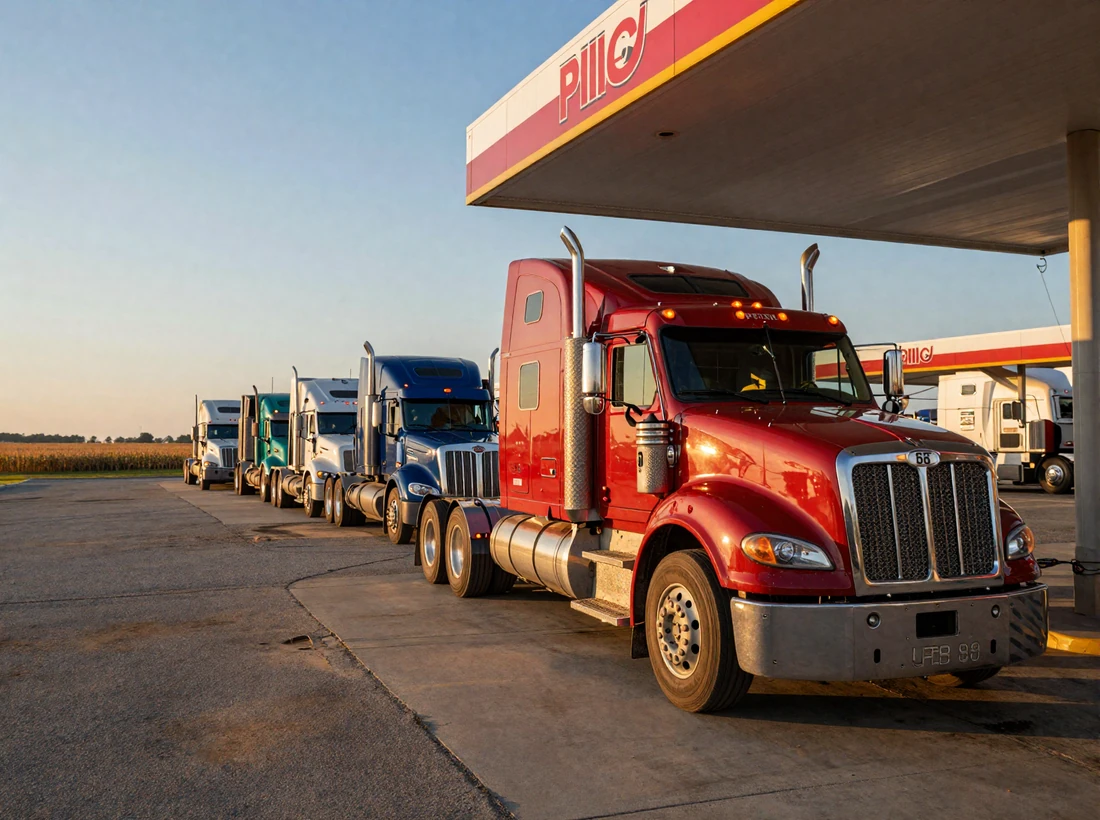
Over-the-road trucking is not what the recruiter videos show. It's not chrome stacks at sunset and a clean reefer pulling into a warehouse on time. It's an alarm at 4:30 AM in a Love's parking lot in western Tennessee, a pre-trip inspection in 22-degree wind, eleven hours of driving broken up by a thirty-minute mandatory break, and then finding a legal place to park before the clock runs out. Life As A Trucker's editors put it about as honestly as anyone has: loneliness is real and often unaddressed, burnout creeps in quietly, the first year humbles almost everyone, and home time isn't always what recruiters promise.
Most over-the-road drivers run two to three weeks out, then a few days home. Inside that pattern, the actual day has very little variety: you drive your eleven, you eat what's in the cab or what's hot at the counter, you shower if the stop has open bays, and then you do it again. Hours of Service regulations decide when you stop and start. Dispatch decides where. Weather in Wyoming decides whether your plan survived. The romance of the open road is real for the first hundred miles. Then it's a job - a hard one, done well by people who chose it.
There is immense pride in knowing my husband is contributing to the backbone of this nation, delivering essential goods that keep our communities thriving. From a trucker wife community
That pride is real too. Most drivers don't want out of the industry - they want a life that fits around it. Which brings us to evenings.
Here's where it gets quiet. The engine cools, the auxiliary power unit hums, the row of trucks on either side belongs to drivers you'll never speak to. The shower line at the Pilot is down to two people. The diner is half-empty. You've got maybe three hours before your reset clock decides for you. This is the window where, statistically, drivers reach for whatever connection they can get - family, a podcast, the dog if the dog made the trip, and increasingly, a phone screen.
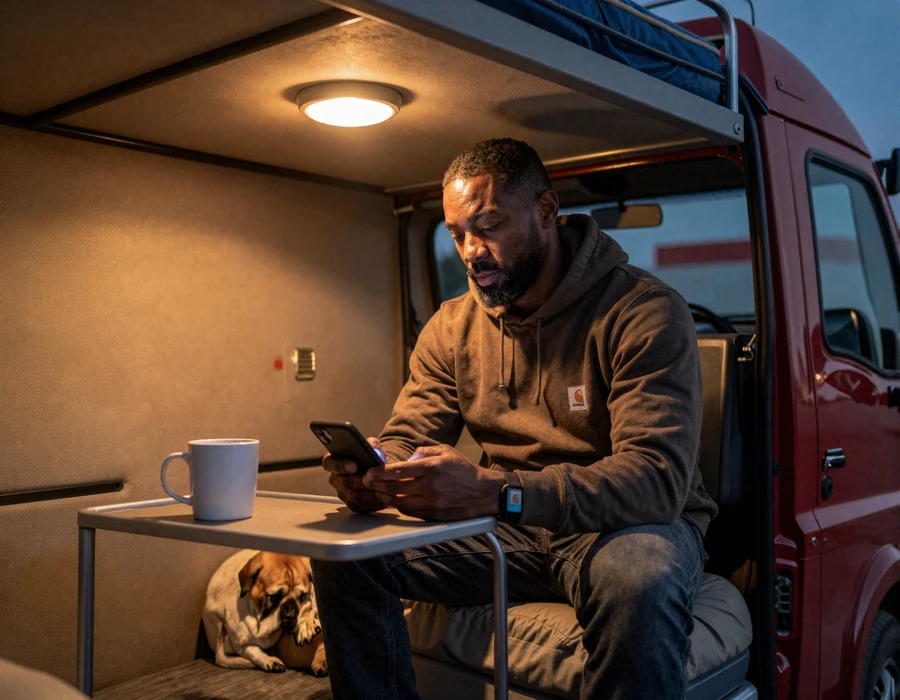
The 8-11 PM window is when traffic on trucker forums spikes, when CB chatter dies down, and when most dating-app activity from drivers happens. It is, in plain terms, the loneliest two hours of a long-haul day. Most relationships that survive OTR life are built in this window - a video call, a voice note, a string of small messages that say I'm here, you're there, we're still real to each other.
The drivers who handle it best aren't the toughest ones. They're the ones with a routine for the hour. Read more on that pattern in long-distance relationships with truckers.
The bottom line: the cab is not the lonely part. The cab is busy. The parking lot after shutdown is the lonely part. Anyone who tells you otherwise has not run a thousand miles in a week.
Dating as a truck driver is not a separate activity from the job - it has to fit inside the job, or it doesn't survive. That means asynchronous communication, mobile-first everything, and a partner (or potential partner) who already understands that "I'll call you tonight" might mean 8 PM Central or 11 PM Eastern depending on where the load goes. Blue-collar identity matters here too. Truckers aren't users of dating apps in the Tinder sense; they're members of a working community that happens to want connection.
The platforms that work for drivers tend to share a few traits: free to browse before any paywall, real profiles instead of swipe-bait, voice-note support for spotty signal, and a tone that respects the lifestyle instead of trying to "fix" it. That's the whole reason RoadHeart exists. For a deeper comparison, see best dating apps for CDL drivers.
Truck stop romance, in the casual sense people sometimes mean it, is mostly a myth - drivers don't have the time, and the reputation isn't worth the trouble. What's real is the slow build: a few weeks of messages, a video call from a Flying J in Effingham, a planned meet-up during home time. That's where actual relationships start.
Ask any veteran OTR driver what the ideal partner looks like and you'll hear some version of the same word: co-pilot. Not a passenger. Not someone waiting at home doing nothing. A co-pilot is someone with their own engine, their own gauge cluster, their own plans - who occasionally rides along, who fields the dispatch noise without resentment, who treats home time like the thing both of you have been steering toward all week.
The co-pilot model is the opposite of the old trucker-wife stereotype where one person sacrifices a career to manage the home while the other disappears for a month. It's two people running parallel routes. Some weeks the routes converge - a long weekend, a planned trip in the sleeper for a fun run down through New Mexico. Most weeks they don't, and that's fine, because both people have full lives independent of each other. That's what makes the convergence count.
Co-pilot is also the right framing for what a trucker-specific dating platform should help build. Not flings, not paywalled fantasies, not endless swipes. Two people who decided, deliberately, to share a route.
Cats are quietly the most underrated trucking companion - lower maintenance, less space, and they don't need a walk in a snowed-over Iowa rest area at 5 AM. Small and medium dog breeds are the more visible half of the statistic. Either way, the reason is the same: the cab gets quiet, and a living thing in the passenger seat changes the whole shape of an eleven-hour day.
The pet stat is also a tell about what drivers actually want from connection. It isn't intensity. It's presence. Something warm that's there when you wake up at a rest stop in Tucumcari. A relationship built around the trucking lifestyle has to deliver some version of the same - small, consistent, undramatic presence - which is exactly why mainstream swipe apps fail this audience. More on that in why mainstream apps struggle with trucker schedules.
Quotes from RoadHeart members about what road life and dating actually feel like.
My truck is loud all day. The minute I shut it down at the Pilot, it's the quietest place on earth. That's the hour I message back. That's when this site makes sense.
I got tired of explaining my schedule. On here nobody asks why I went silent for fourteen hours - they already know I was driving. That's the whole difference.
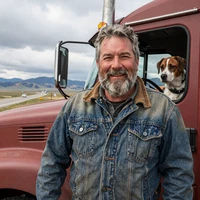
My dog rides with me. So does my girlfriend, three or four runs a year. Co-pilot isn't a metaphor in my truck - it's literal, and it changed how I feel about the whole job.
The 2026 guide for partners - the OTR schedule, communication that survives spotty signal, and trust across the miles.
Read the guideHow location-based swiping penalizes OTR drivers, and what a route-aware platform looks like instead.
Read the analysisFind drivers and partners by state - eleven trucking states from Texas to Wyoming, with routes that pass through your area.
Explore by state